Differences Between Moths and Butterflies at Night
Many people enjoy observing insects in their gardens as evening falls. The fluttering creatures that appear around porch lights often raise a question: is that a moth or a butterfly? While both belong to the order Lepidoptera, they exhibit several consistent differences that become especially apparent at night. Understanding these distinctions can enrich one’s experience of nighttime insect watching.
The common assumption that all nocturnal flying insects are moths is largely accurate, but some butterflies are active during twilight hours as well. To identify which is which, observers can look at specific physical traits such as wing position and antenna shape. These features are reliable indicators that do not require capturing the insect.
This article outlines the key differences between moths and butterflies, with a focus on evening and night observation. It also provides practical approaches for those interested in exploring the diversity of Lepidoptera after dark.
Wing Position at Rest
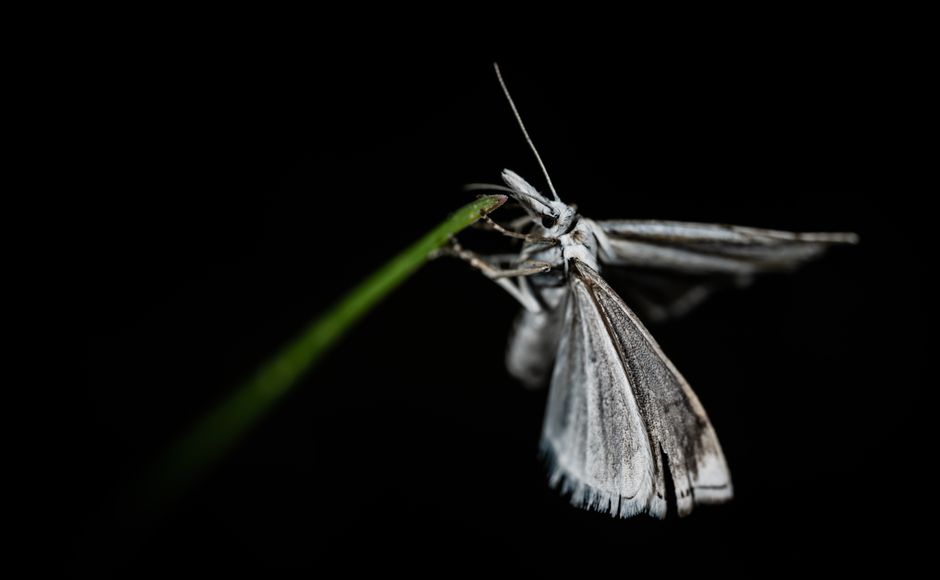
One of the most straightforward ways to distinguish a moth from a butterfly is by observing the position of its wings when the insect is at rest. Butterflies typically hold their wings vertically above their bodies, with the upper surfaces pressed together. This posture exposes the bright colors and patterns on the upper wing surfaces, which serve as signals for mating and warning to predators. In contrast, moths generally rest with their wings held flat out to the sides or folded in a roof-like shape over the abdomen. This positioning helps them blend into bark, leaves, or other surfaces, reducing visibility to predators.
At night, when many moths are active and some butterflies may be asleep, one can find resting insects on foliage, walls, or near lights. Using a gentle flashlight, an observer can approach slowly and note the wing posture. If the wings are held vertically, the insect is likely a butterfly. If flat or tented over the body, it is probably a moth. However, there are exceptions: some moths, such as certain Geometridae, rest with wings raised in a butterfly-like manner, and some butterflies, like skippers, hold their wings at an angle. Therefore, wing position is best used in combination with other characteristics.
Antenna Shape
The shape of the antennae provides another clear distinction. Butterflies possess antennae that end in a distinct bulb or club, often described as club-tipped. This clubbed appearance is a consistent feature across most butterfly species. Moths, on the other hand, have antennae that are feathery, comb-like, or simply filamentous without a terminal club. The feathery antennae of moths are particularly noticeable in males, as they are used to detect pheromones released by females over considerable distances.
Observing antenna shape at night requires a close look, but it is possible when an insect is stationary. Using a magnifying lens or a camera with a macro setting can help. When a resting insect shows antennae with a rounded tip, it is a butterfly. If the antennae appear branched or thread-like without a distinct end knob, it is a moth. This trait is more reliable than wing position because fewer exceptions exist. Still, some day-flying moths have antennae that are not strongly feathery, and a few butterflies have slightly thickened antennae that can be confused. Overall, antenna shape remains a key diagnostic feature.
Activity Patterns and Time of Day
Activity timing is perhaps the most intuitive clue for differentiating moths and butterflies. Most butterflies are diurnal, meaning they are active during the day and rest at night. Moths are predominantly nocturnal, with many species taking flight after dusk. Nonetheless, this pattern is not absolute. Some butterflies, such as crepuscular skippers, are active at dawn and dusk. Conversely, many moths, including some hawk moths and tiger moths, are day-flying and can be seen in full sunlight.
Therefore, while time of day provides a strong initial indication, it should not be used alone. The presence of an insect at night strongly suggests it is a moth, but one should also check wing position and antenna shape to confirm. Artificial lights attract many moths, whereas butterflies rarely come to lights after dark. Observers can set up a light trap or simply watch a porch light to see which insects appear after sunset.
Additional Physical Characteristics
Beyond the main traits, other features can assist in identification. Body shape and texture differ: moths tend to have stout, furry bodies, while butterflies typically have slender, smooth bodies. The fur on moths helps insulate them during cool nights. Wing coupling is another structural difference. Most moths have a frenulum, a bristle-like structure that joins the forewing and hindwing, ensuring coordinated flight. Butterflies lack this and rely on a broad overlap between the wings. The frenulum is not easily seen without close inspection, but it can be observed in captured specimens or high-resolution photographs.
Coloration also offers clues, though it is less reliable because both groups exhibit a wide range of colors and patterns. Many moths are cryptically colored in browns and grays, while many butterflies display bright, contrasting patterns. However, there are brilliantly colored moths and dull butterflies, so color alone is a supporting detail rather than a definitive identifier.
Practical Approaches for Evening Observation
For those interested in observing Lepidoptera at night, a few straightforward techniques can improve the experience. Using a light source, such as a mercury vapor lamp or an ultraviolet LED, can attract a variety of moths to a white sheet or a wall. This method allows for close examination of wing position and antenna shape without disturbing the insects. Approaching resting insects slowly and using a flashlight with a red filter may reduce their likelihood of flying away, as many insects are less sensitive to red light.
Keeping a notebook to record observations of wing posture, antenna type, and activity time can help build identification skills over time. Photographing the insects with a macro lens provides a permanent record that can be compared with field guides. It is important to remember that not all insects that resemble moths are actually moths; some beetles and other orders also come to lights. With practice, the subtle differences between moths and butterflies become easier to recognize, deepening one’s appreciation for the diversity of nighttime insects.